
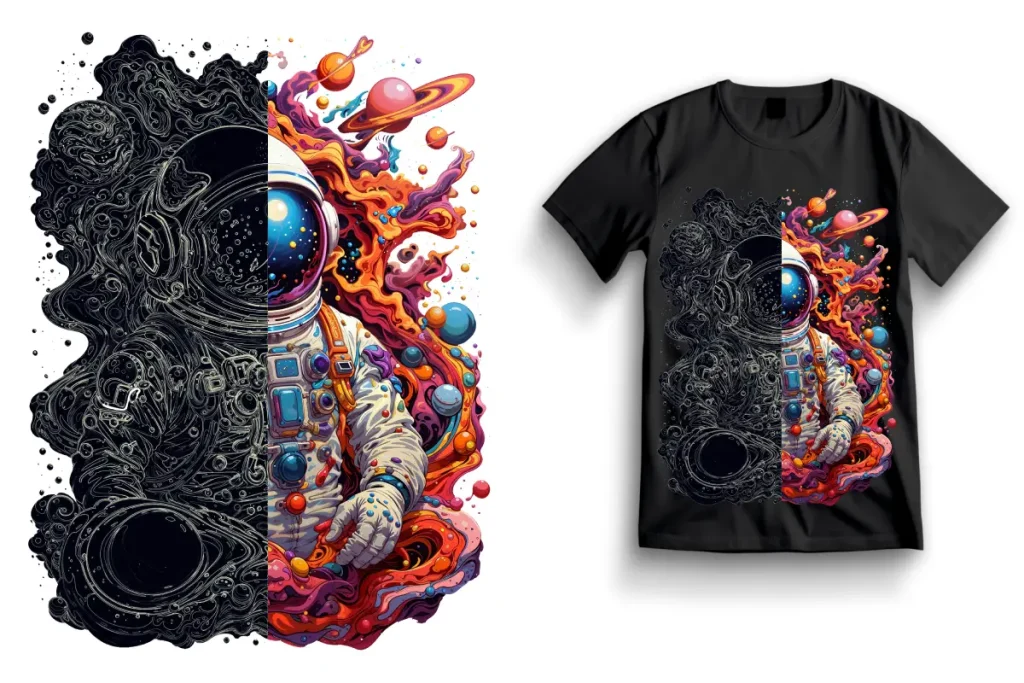
The apparel printing industry has evolved past the days of messy ink separation and labor-intensive manual weeding. Today, custom garment decorators demand both crisp presentation and immediate turnaround times to satisfy highly specialized fashion standards. This urgent market reality has guided independent streetwear brands and high-volume print facilities toward premium dtf transfers to optimize their active daily pipelines. Direct-to-film digital technology has eliminated the traditional technical limits of textile decoration, delivering deep color replication and fine-line resolution straight to your heat press platen. If your current business objective is to fulfill complex orders with zero design restrictions while keeping labor costs under tight control, mastering modern DTF execution is your brand’s ultimate competitive edge.
The Physics of Direct-to-Film: Why Modern Shops Are Moving Away from Screen Printing
Understanding why this modern method has captured the custom apparel sector requires a close look at the material science happening behind the scenes. Unlike traditional screen printing that forces heavy layers of plastisol ink onto the surface or standard vinyl films that form a stiff plastic shield on the garment, direct-to-film prints utilize an ultra-thin pigment ink layer. This digital ink formulation is paired with a specialized hot-melt polyurethane adhesive powder during the primary print cycle, acting as a highly resilient structural bridge when heat is applied.
When you clamp your commercial machine platen down, this adhesive powder liquefies and flows directly into the microscopic spaces between the textile threads. This chemical reaction creates a deeply embedded bond that allows the fabric to behave naturally, matching the organic stretch of the shirt. The resulting application boasts an incredibly soft hand feel that can be twisted, pulled, and flexed repeatedly without showing micro-fractures, wrinkling, or premature edge peeling. Because the entire preparation operates within a fully digital landscape, you can merge high-resolution photographic textures, subtle transparency drops, and crisp vector typography inside a single layout without increasing your baseline production times.
Universal Fabric Compatibility: Expanding Your Shop Product Catalog
One of the most persistent issues found in older garment decoration pipelines is strict material limitation. Traditional sublimation printing remains strictly confined to light-colored polyester substrates, while direct-to-garment digital machines struggle to maintain vivid white opacity on anything outside of pure ring-spun cotton. Shifting your main commercial shop production over to high-grade film applications completely neutralizes these technical roadblocks, giving you a universal decoration system that adheres perfectly to multiple textile compositions, including:
- Premium ring-spun cotton, dense fleece hoodies, and heavy organic canvas fabrics
- 100 percent performance polyester, athletic team jerseys, and moisture-wicking activewear
- Rugged nylon jackets, corporate outerwear, and slick synthetic satin finishes
- Heavy poly-cotton blend garments, denim streetwear jackets, and structured caps
This wide-ranging fabric compatibility allows expanding apparel labels to diversify their active product catalogs instantly. You can easily produce comprehensive corporate merchandise packages that bundle lightweight promotional shirts with heavy-duty weather-proof uniform coats using a single printing source. This guarantees absolute brand consistency across different material finishes without requiring multiple production machinery systems in your facility.
Sourcing Locally: Building an Agile Supply Chain for Rush Orders
In a modern print-on-demand retail landscape, shipping bottlenecks can completely ruin your brand’s consumer reputation. Waiting several days or weeks for an overseas delivery container to arrive can cause you to miss tight event deadlines, clear out your liquid cash flow, and leave clients frustrated. Forward-thinking print shop operators eliminate this operational exposure by actively searching for professional dtf transfers near me to establish a responsive, regional supply network. Partnering with a dedicated regional provider gives you the unique ability to restock your pressing benches in hours, double-check physical print samples before running high-volume jobs, and maintain total control over your production pipeline.
If your business is striving to secure the absolute best dtf transfer at Houston print shops can provide, you must evaluate potential manufacturing partners based on their hardware infrastructure and automated quality controls. Industrial wide-format machinery utilizing continuous white ink circulation is mandatory for commercial-grade success. This constant mechanical agitation prevents the heavy titanium dioxide particles found in white inks from settling inside the lines, which guarantees a dense, completely opaque backing layer that effectively blocks fabric dye migration and keeps your top-layer colors looking bright and true to your original digital files. Embracing a localized Houston dtf transfer workflow with an expert facility like Harwin DTF means you can support last-minute changes and maintain a zero-inventory model with total peace of mind.
Maximizing Print Margins: The Advanced Economics of Gang Sheet Layouts
Fulfilling multi-colored custom orders while trying to maintain a healthy retail markup requires smart material management and strategic canvas layout planning. Relying on single-image cutouts is an expensive operational mistake because it leaves too much unprinted space on the carrier sheet. Professional apparel decorators avoid this pitfall by utilizing a high-efficiency layout technique known as a gang sheet layout. This method involves combining numerous distinct graphics, chest logos, custom neck labels, and sleeve designs onto one continuous, wide roll of film.
By packing your digital canvas tightly and filling up every square inch of available film width, you drastically drop your baseline production cost per image. This specific strategy becomes incredibly powerful when you are handling complex corporate accounts where varied logos must be prepared simultaneously. It transforms your daily production line, allowing you to fulfill small-batch custom requests at a price point that remains highly appealing to your target market while preserving excellent profitability for your business. Utilizing digital gang building software ensures that no ink or media space goes to waste.
The Professional Pressing Guide: Step-by-Step Instructions for Perfect Application
Even the highest quality digital film sheets will fail to yield professional results if your final heat application is rushed or uncalibrated. Achieving a permanent, retail-grade bond requires balancing temperature, pressure, and time variables with absolute precision. Follow this commercial workflow to ensure your designs remain flawless through dozens of wash cycles:
- The Moisture Purge: Place your blank garment flat onto the lower platen of your press and clamp the heating element down for 6 to 8 seconds. This critical preliminary step drives out trapped atmospheric humidity within the fabric fibers and smooths out deep packing creases, preparing an optimal, flat surface for the hot-melt adhesive powder.
- Precise Alignment: Center your printed carrier film over the targeted fabric area, making sure the textured, powder-coated side is resting completely flat against the textile face.
- The Primary Fuse: Apply heavy, uniform pressure (around 55 to 60 PSI) at a calibrated temperature ranging between 290°F and 315°F (143°C to 157°C). Hold this solid press for exactly 12 to 15 seconds.
- The Cooling Window: If you are working with classic cold-peel film formulations, remove the garment from the press and allow it to sit undisturbed until the film surface returns completely to room temperature. Stripping away the plastic carrier sheet while it is still warm can easily tear the curing ink layer away from the fabric.
- The Finishing Seal: Place a piece of premium parchment paper or a textured silicone protective sheet directly over the freshly exposed ink design and press one final time for 5 seconds. This secondary press locks the edges deep into the textile weave, creates an organic matte look, and removes any unnatural plastic sheen.
Frequently Asked Questions Regarding Professional Fabric Film Applications
What specific graphic file extensions deliver the sharpest borders on film rolls?
To secure pristine typography and razor-sharp design borders, you should always submit your digital artwork using uncompressed vector file formats such as PDF, EPS, or SVG. If your project requires raster graphics like complex paintings or photographs, make sure the final file is exported with a minimum resolution of 300 DPI at its actual print size, featuring a completely transparent background with no stray pixel halos or anti-aliased edges.
Why do some digital film prints develop small bubbles or lift away from the shirt after pressing?
Texture bubbling or early edge lifting is almost always caused by trapped moisture inside the garment fibers during application, or because the hot-melt adhesive powder was not fully liquefied. Always ensure you execute a thorough pre-press cycle to dry the fabric out completely, and verify that your heat press platens are maintaining an even temperature across the entire metal surface without hidden cold spots.
Can I safely apply these commercial film graphics using a standard household iron?
While a household iron can work for simple home crafts or basic prototype proofing, it is highly discouraged for commercial retail inventory. Household irons cannot provide the uniform downward pressure or the exact, continuous heat thresholds required to properly melt industrial thermoplastic powder. To ensure your custom apparel can successfully survive dozens of intensive machine washes, a professional heavy-duty manual or pneumatic heat press is required.
What is the best way for consumers to wash these custom garments to prevent fading?
To extend the operational life of the custom design, end consumers should always turn the garment inside out before washing to minimize surface friction. Wash using cold water cycles alongside mild household laundry detergents, and avoid aggressive chlorine bleaches or heavy chemical fabric softeners. For drying, hanging the apparel to air dry or using low-temperature tumble settings will keep the graphics looking brand new for years.
Scaling a custom clothing company requires a reliable production partner that understands the delicate balance between high-contrast print clarity and fast turnarounds. By aligning your workshop with the advanced manufacturing processes at Harwin DTF, you gain immediate access to bright color reproduction, resilient wash durability, and dedicated regional technical support designed to keep your shop running smoothly through every peak ordering season. Partner with us today to secure the premium prints your business requires to lead the market.